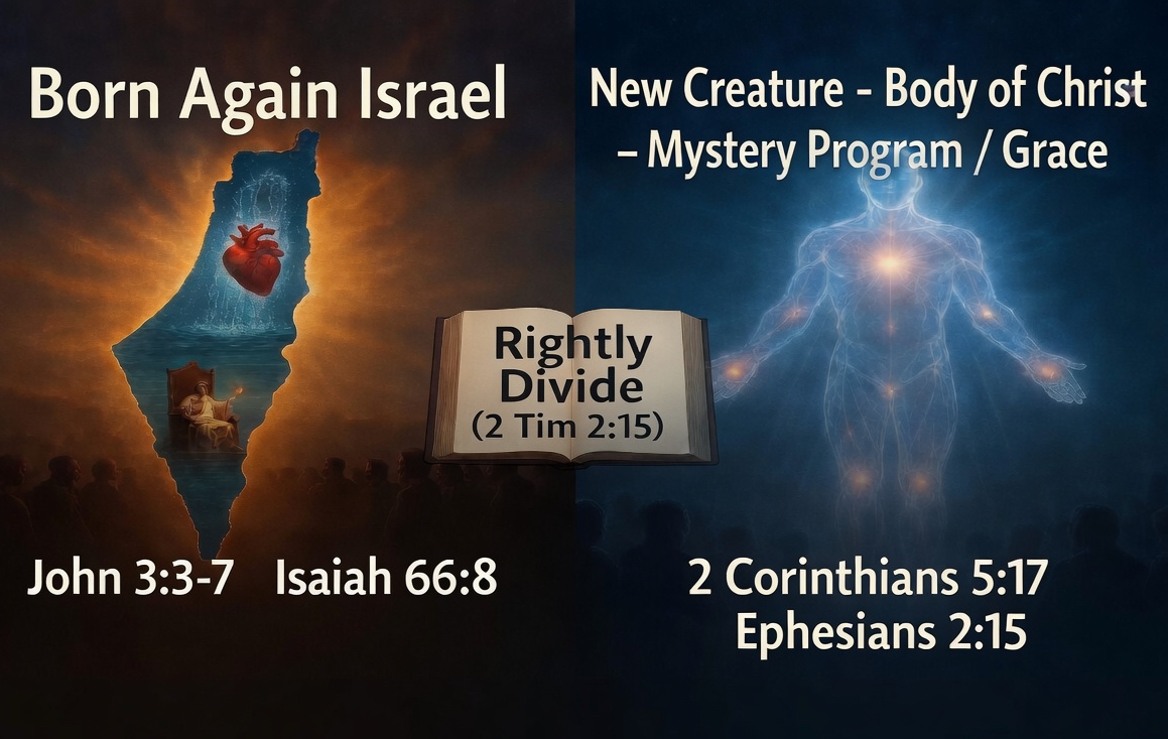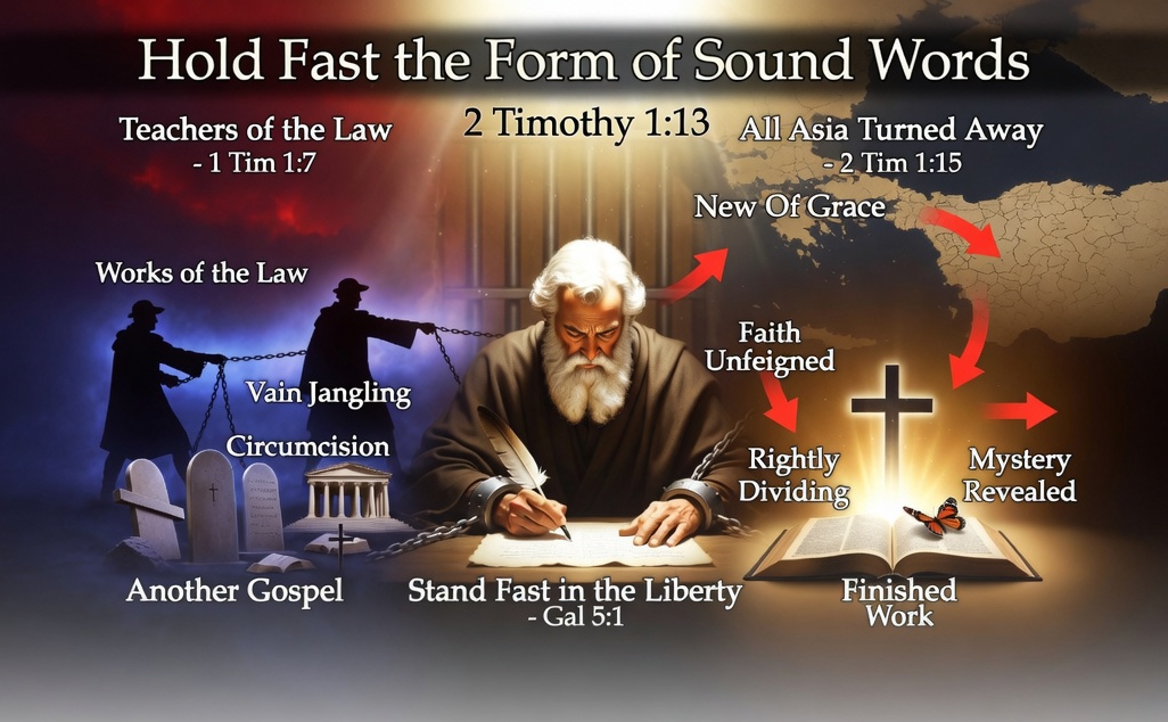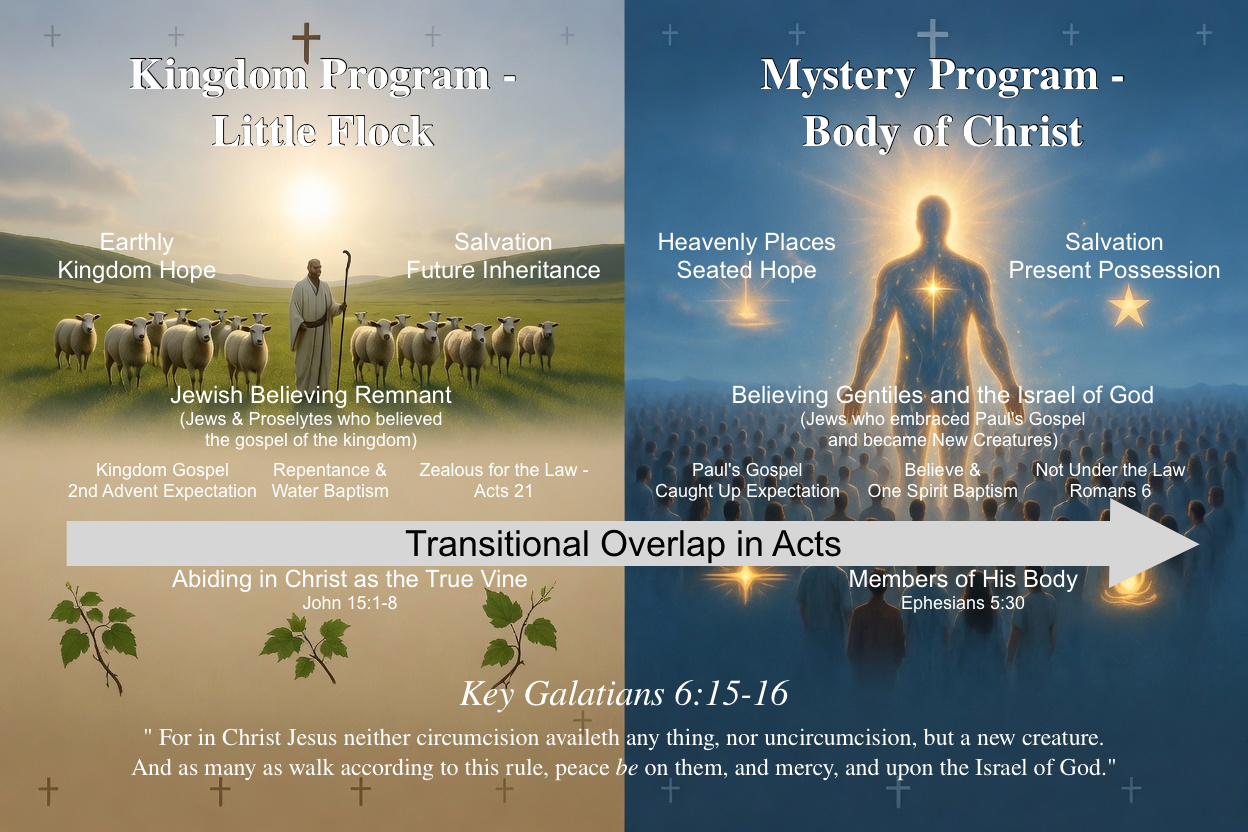
The revelation of the mystery given to the Apostle Paul is all about our identity as members of the body of Christ—not sheep in some earthly flock.
Our Identity as member of the body of Christ
This truth comes straight from Paul’s epistles (the only place God reveals it). Have you ever noticed how the Lord Jesus, during His earthly ministry to Israel, called His followers “sheep” and talked about the “little flock” receiving the kingdom? Yet when Paul—the apostle to us Gentiles—unpacks the mystery kept secret since the world began, that language completely drops away. Instead, he hammers home something brand new: we are members of His body, a heavenly new creation with Christ as the Head. That’s not a minor detail. It’s the key to understanding who we really are in this dispensation of grace.
Paul states it clearly in Ephesians 3 and Colossians 1:
“Whereof I was made a minister, according to the dispensation of God which is given to me for you, to fulfil the word of God; Even the mystery which hath been hid from ages and from generations, but now is made manifest to his saints: To whom God would make known what is the riches of the glory of this mystery among the Gentiles; which is Christ in you, the hope of glory.” (Colossians 1:25-27 KJV)
And right before that, he ties it to the one body:
“That the Gentiles should be fellowheirs, and of the same body, and partakers of his promise in Christ by the gospel.” (Ephesians 3:6 KJV)
This mystery wasn’t hidden in prophecy—it was hid in God. No Old Testament prophet ever saw it. It’s not an upgrade to Israel’s program; it’s a brand-new program where Jew and Gentile are made one new man (Ephesians 2:15). That’s our identity: not sheep waiting for an earthly shepherd-king, but living members of the risen, ascended Christ Himself.
What Does This Identity as Members of the Body of Christ Entail?
Paul doesn’t leave us guessing. He unpacks it throughout his thirteen epistles with glorious, practical reality. Here’s what it looks like for us today:
We are joined to the Lord as one spirit and one body.
“Know ye not that your bodies are the members of Christ? … For he that is joined to the Lord is one spirit. … For by one Spirit are we all baptized into one body, whether we be Jews or Gentiles, whether we be bond or free; and have been all made to drink into one Spirit.” (1 Corinthians 6:15, 17; 12:13 KJV)
“For we are members of his body, of his flesh, and of his bones.” (Ephesians 5:30 KJV)
Christ is our Head—we are His body, the fulness of Him.
“And hath put all things under his feet, and gave him to be the head over all things to the church, Which is his body, the fulness of him that filleth all in all.” (Ephesians 1:22-23 KJV)
We are complete in Him (Colossians 2:10), seated together in heavenly places (Ephesians 2:6), and already blessed with all spiritual blessings (Ephesians 1:3). No waiting for a future kingdom position—we have it now by grace.
We are a new creature with a heavenly calling and hope.
“Therefore if any man be in Christ, he is a new creature: old things are passed away; behold, all things are become new.” (2 Corinthians 5:17 KJV)
“There is one body, and one Spirit, even as ye are called in one hope of your calling.” (Ephesians 4:4 KJV)
Our hope isn’t earthly land or throne—it’s “Christ in you, the hope of glory” and our citizenship in heaven (Philippians 3:20).
No distinction between Jew and Gentile—liberty, not law.
“There is neither Jew nor Greek, there is neither bond nor free, there is neither male nor female: for ye are all one in Christ Jesus.” (Galatians 3:28 KJV)
We stand fast in the liberty wherewith Christ hath made us free (Galatians 5:1). No more yoke of bondage, no more “to the Jew first” in our program—salvation is sent to the Gentiles (Acts 28:28).
This identity changes everything about how we walk: we walk by faith in what Paul says about us (not by sight or performance), we forgive others because God has already forgiven us all trespasses (Colossians 2:13; Ephesians 4:32), and we labor in love because we are already accepted in the Beloved. It’s not “try harder to be good sheep”—it’s “live as the new creature you already are.”
Why Doesn’t Paul Ever Call Believers in the Body of Christ “Sheep”?
If the body of Christ is just a continuation of Israel’s program, why does Paul never once use the shepherd/sheep imagery for us? He quotes the Old Testament once in Romans 8:36 (“we are killed all the day long; we are accounted as sheep for the slaughter”), but that’s applying an Old Testament lament to the sufferings of this present time—not calling us sheep. In the Gospels and Peter’s epistles (written to the scattered Jewish remnant), sheep language fits perfectly with the prophetic kingdom program. But Paul? He’s silent on it for the body of Christ.
Have you ever wondered why so many today treat “the church” as one big worldwide organization with layers of bishops, popes, or celebrity pastors ruling over everyone? Paul never sets that up. In the dispensation of grace, bishops (overseers), pastors, and elders are local servants raised up by the Holy Ghost for local assemblies—not officers over the body of Christ. The body itself has only one Head: the risen, ascended Lord Jesus Christ. No middle management. No earthly vicars. Just members functioning together under the direct headship of Christ.
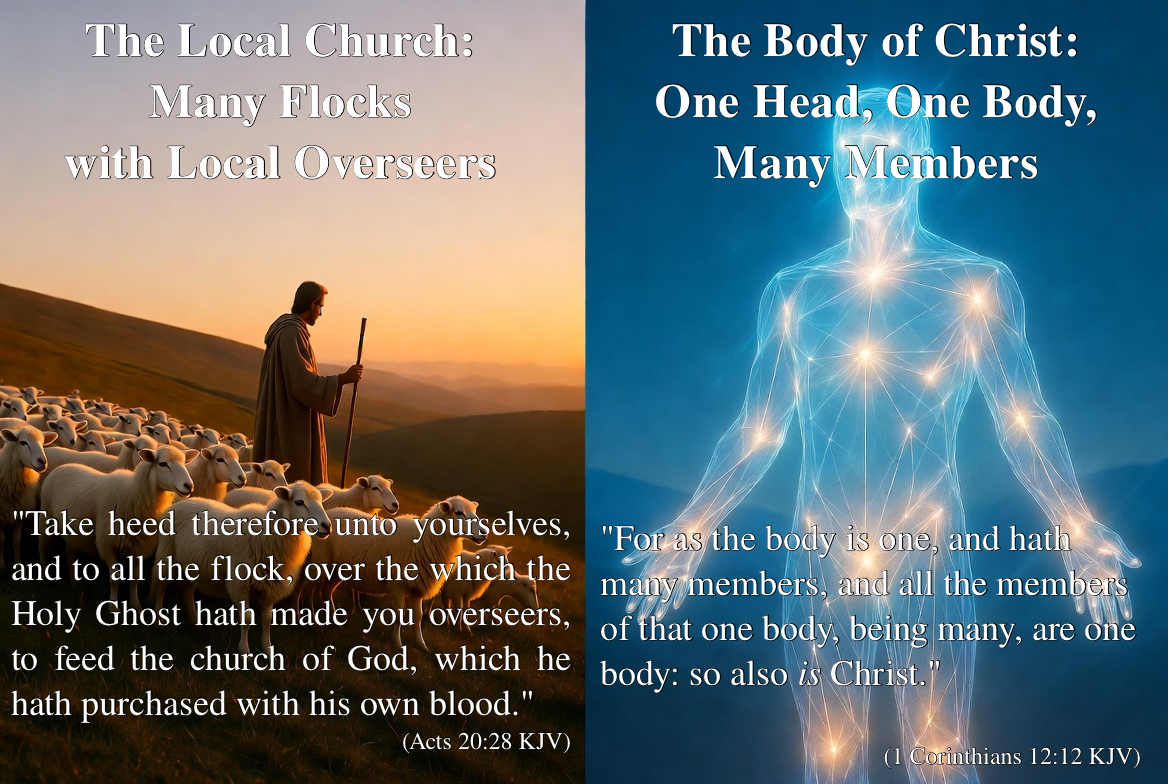
Paul makes this crystal clear when he addresses the elders of the church at Ephesus (a specific local assembly) in Acts 20. This is the only time in all of Paul’s writings (or the book of Acts) that he uses the word “flock” in reference to believers. And even here, the context is unmistakably pastoral and local—not a title for the whole body of Christ.
“Take heed therefore unto yourselves, and to all the flock, over the which the Holy Ghost hath made you overseers, to feed the church of God, which he hath purchased with his own blood. For I know this, that after my departing shall grievous wolves enter in among you, not sparing the flock.” (Acts 20:28-29 KJV)
If Paul saw the entire body of Christ as one big “flock” needing human shepherds, why didn’t he ever say so? Why limit this language to the elders of one local church?
Here’s what this passage actually teaches:
- The flock = the local assembly at Ephesus. Paul is speaking face-to-face with the elders (plural) of that specific church. The Holy Ghost made them overseers (bishops) of their group—not of all believers everywhere.
- Overseers (bishops) are local. The words “bishop” and “overseer” mean “one who watches over.” In Paul’s instructions to Timothy and Titus, he lists qualifications for bishops and deacons in local churches (1 Timothy 3; Titus 1). These men feed, guard, and care for the saints in their assembly—like shepherds watching a local flock at night.
- The church of God they feed is the local gathering of believers, purchased with Christ’s blood. Paul uses “church” hundreds of times, usually for local assemblies (“the church at Corinth,” “the church of the Thessalonians,” etc.). He never appoints one man (or a board) to rule the body of Christ.
Paul gives the same local focus elsewhere:
“And we beseech you, brethren, to know them which labour among you, and are over you in the Lord, and admonish you;” (1 Thessalonians 5:12 KJV)
“Let the elders that rule well be counted worthy of double honour, especially they who labour in the word and doctrine.” (1 Timothy 5:17 KJV)
These are men laboring among you—in the local setting. They are not mediators between you and Christ. They are fellow members gifted to help the body function locally.
The overseer/flock language makes perfect sense when limited to a local setting. In a local assembly, believers gather in one place under the care of men whom the Holy Ghost has raised up as overseers (bishops/elders/pastors). These men can actually know the saints by name, feed them with sound doctrine from Paul’s epistles, watch for wolves, and help the group function as a healthy local body. Paul told the Ephesian elders to “take heed… to all the flock, over the which the Holy Ghost hath made you overseers, to feed the church of God” (Acts 20:28 KJV). That is practical, face-to-face shepherding work—exactly what a small, visible congregation needs.
A universal “flock” with human overseers, however, would require some man or board to watch over every believer on earth, which Paul never establishes and which contradicts the truth that Christ alone is Head over the whole body (Colossians 1:18; Ephesians 1:22-23). In the local church the flock imagery fits; in the body of Christ the higher truth of members of His body governs. This keeps local elders as helpful servants in their own assembly while preserving the direct headship of Christ over every member everywhere. What a wise and orderly arrangement the Apostle Paul delivered!
Contrast with the Kingdom Program
Now compare that with the sheep/flock language aimed at Israel:
- Jesus: “Fear not, little flock; for it is your Father’s good pleasure to give you the kingdom.” (Luke 12:32)
- To the twelve: “Go not into the way of the Gentiles… but go rather to the lost sheep of the house of Israel.” (Matthew 10:5-6)
- Future judgment: the sheep and goats separation (Matthew 25).
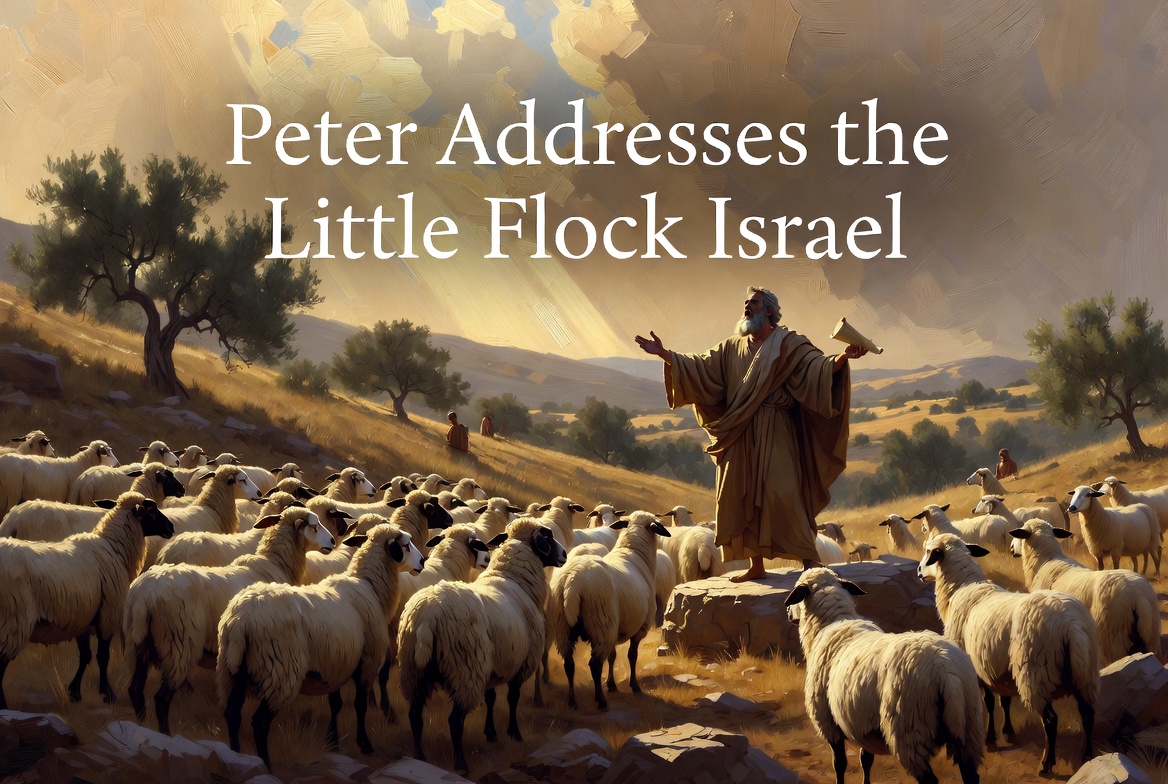
- Peter (to the scattered Jewish remnant): “Feed the flock of God which is among you, taking the oversight thereof…” (1 Peter 5:2)
That earthly, kingdom-ready imagery fits prophecy. Paul, however, reveals something higher for this age: we are not sheep waiting for an earthly fold or a chief shepherd to appear on earth. We are already members of His body, with Christ as the one Head.
“And he is the head of the body, the church: who is the beginning, the firstborn from the dead; that in all things he might have the preeminence.” (Colossians 1:18 KJV)
“From whom the whole body fitly joined together and compacted by that which every joint supplieth, according to the effectual working in the measure of every part, maketh increase of the body unto the edifying of itself in love.” (Ephesians 4:16 KJV)
No human “shepherd” stands between you and the Head. The local overseer helps the saints in his assembly, but he doesn’t rule the body of Christ. That’s why Paul warns the Ephesian elders about wolves coming in among them—local threat to a local flock. The body of Christ doesn’t need protecting by men; it is kept by the power of God.
This is liberating. You don’t answer to some distant religious hierarchy. You answer directly to the Head, who works through gifted members in local assemblies for the perfecting of the saints (Ephesians 4:11-13). Local elders/pastors/bishops are gifts to help that assembly grow up into Christ. They feed, guard, and equip the believers who are assembling together in a location.
This is why rightly dividing Paul’s words matters so much. Mixing kingdom sheep language into the body of Christ pulls us back under an earthly program and robs us of the heavenly liberty and direct access we have in Christ. Stand fast in who you are: a living member of His body, not a sheep in a fold. Stand fast in who you are in Christ—a member of His body. That’s the mystery revealed to Paul for us today. What a glorious identity! Let that truth dwell in you richly.
© 2026 Edward R. Cross