“Now I say that Jesus Christ was a minister of the circumcision for the truth of God, to confirm the promises made unto the fathers: And that the Gentiles might glorify God for his mercy; as it is written, For this cause I will confess to thee among the Gentiles, and sing unto thy name. And again he saith, Rejoice, ye Gentiles, with his people. And again, Praise the Lord, all ye Gentiles; and laud him, all ye people. And again, Esaias saith, There shall be a root of Jesse, and he that shall rise to reign over the Gentiles; in him shall the Gentiles trust.” (Romans 15:8-12 KJV)
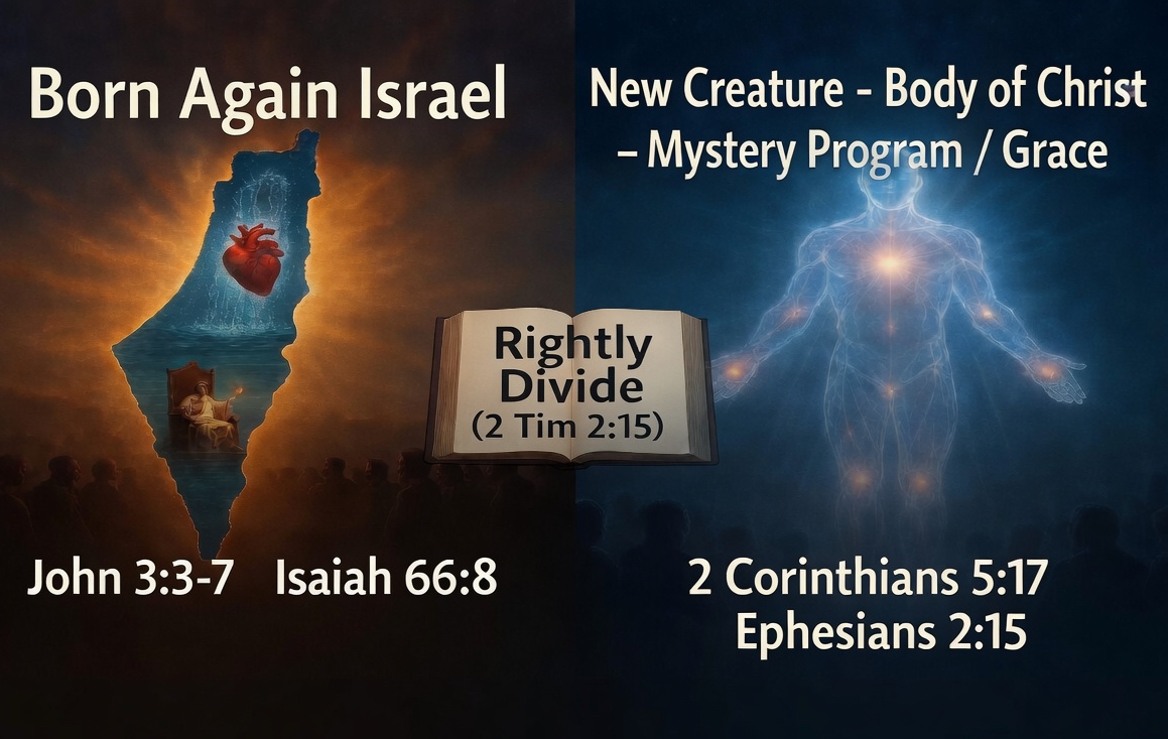
Have you ever wondered while reading 1 Peter why the tone, the promises, and the hope feel so different from Paul’s letters to the churches? Most folks just lump everything together after the cross and call it “the church.” But friend, that approach leaves us ashamed when we try to study the Bible. Paul told us exactly how to handle this: “Study to shew thyself approved unto God, a workman that needeth not to be ashamed, rightly dividing the word of truth.” (2 Timothy 2:15 KJV) Let’s do that today and look straight at Peter’s audience through Mid-Acts right division. We’ll let the King James Bible speak clearly.
Christ’s Ministry: A Minister of the Circumcision
Jesus Himself set the pattern for everything that followed in the early chapters of Acts.
“But he answered and said, I am not sent but unto the lost sheep of the house of Israel.” (Matthew 15:24 KJV)
“Now I say that Jesus Christ was a minister of the circumcision for the truth of God, to confirm the promises made unto the fathers.” (Romans 15:8 KJV)
Have you ever stopped to consider how consistently the Lord limited His personal ministry? He came as a minister of the circumcision—to Israel, to confirm the prophetic promises spoken by the prophets since the world began. His message was the gospel of the kingdom: “Repent: for the kingdom of heaven is at hand.” (Matthew 4:17 KJV) He healed the sick, cast out devils, and preached that the long-awaited kingdom was near.
When He sent out the twelve, the instructions were crystal clear:
“These twelve Jesus sent forth, and commanded them, saying, Go not into the way of the Gentiles, and into any city of the Samaritans enter ye not: But go rather to the lost sheep of the house of Israel. And as ye go, preach, saying, The kingdom of heaven is at hand.” (Matthew 10:5-7 KJV)
Even after His resurrection, the commission given to the eleven still centered on Israel first. The program was to begin in Jerusalem, then Judaea, Samaria, and only then to the uttermost part of the earth. (Acts 1:8 KJV) The apostles asked the risen Lord, “Lord, wilt thou at this time restore again the kingdom to Israel?” (Acts 1:6 KJV) Jesus did not rebuke their expectation—He simply told them the timing was not for them to know.
This is the same ministry Peter and the twelve continued in the early chapters of Acts. Peter’s Pentecost sermon was saturated with Joel’s prophecy and David’s promises about Israel’s King. It was not the mystery that was later revealed to Paul. It was what “the prophets have spoken” since the world began. (Acts 3:21 KJV)
Christ was a minister of the circumcision to fulfill prophecy. Peter, as one of the twelve, continued that same prophetic program to Israel. Understanding this is key to rightly dividing who Peter was writing to in his epistles.
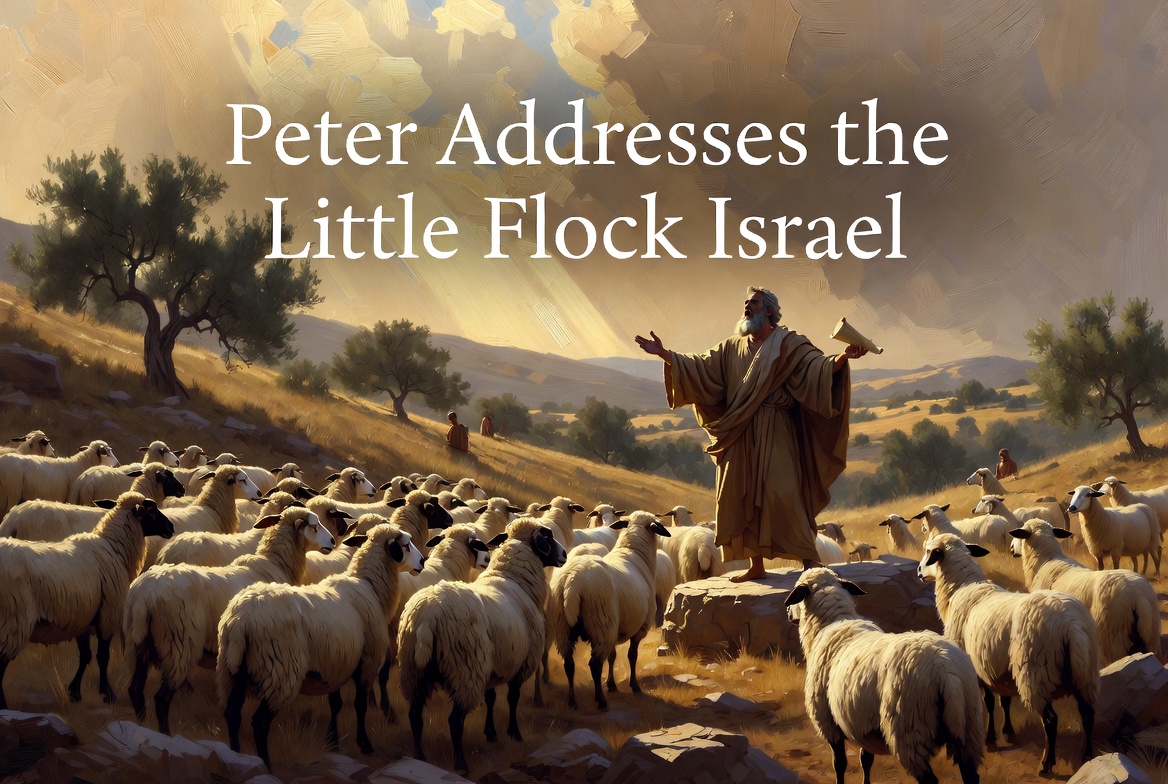
Peter’s Commission and the Little Flock
Jesus spoke directly to this group when He said:
“Fear not, little flock; for it is your Father’s good pleasure to give you the kingdom.” (Luke 12:32 KJV)
This “little flock” refers to the small believing remnant of Israel who received Jesus as their Messiah and King during His earthly ministry. In contrast to the nation as a whole that rejected Him, these were the faithful few who trusted in the promised kingdom.
Have you noticed how the Lord repeatedly emphasized this distinction? When sending out the twelve apostles, He gave them very specific instructions:
“These twelve Jesus sent forth, and commanded them, saying, Go not into the way of the Gentiles, and into any city of the Samaritans enter ye not: But go rather to the lost sheep of the house of Israel.” (Matthew 10:5-6 KJV)
Even later, when a Gentile woman came seeking help, Jesus declared:
“But he answered and said, I am not sent but unto the lost sheep of the house of Israel.” (Matthew 15:24 KJV)
After His resurrection, the commission expanded to “all nations,” but the focus remained on offering the kingdom to Israel first. The early chapters of Acts show Peter and the twelve continuing this exact ministry to Israel. On the day of Pentecost, Peter stood up and addressed “ye men of Judaea, and all ye that dwell at Jerusalem” (Acts 2:14 KJV), calling the nation to repentance so that the prophesied kingdom could be established.
This believing remnant—the little flock—continued as the “church” (assembly) we read about in the opening chapters of Acts. They were still operating under the prophetic program, looking for the restoration of the kingdom to Israel.
“Lord, wilt thou at this time restore again the kingdom to Israel?” (Acts 1:6 KJV)
Jesus didn’t correct their expectation; He simply told them it was not for them to know the times or the seasons. Peter’s sermons in Acts 2 and 3 are full of calls to Israel to repent “so that the times of refreshing may come from the presence of the Lord” and that God would “send Jesus Christ” to fulfill all that the prophets had spoken. (Acts 3:19-21 KJV)
Then came the great turning point. After Stephen’s bold testimony and martyrdom, severe persecution broke out:
“And Saul was consenting unto his death. And at that time there was a great persecution against the church which was at Jerusalem; and they were all scattered abroad throughout the regions of Judaea and Samaria, except the apostles.” (Acts 8:1 KJV)
This persecution scattered the little flock far and wide. These scattered Jewish believers became the primary audience for Peter’s letters.
Even years later, after Paul’s conversion and the revelation of the mystery, the distinction between the two programs remained. Paul records the agreement reached in Jerusalem:
“But contrariwise, when they saw that the gospel of the uncircumcision was committed unto me, as the gospel of the circumcision was unto Peter; (For he that wrought effectually in Peter to the apostleship of the circumcision, the same was mighty in me toward the Gentiles:) And when James, Cephas, and John, who seemed to be pillars, perceived the grace that was given unto me, they gave to me and Barnabas the right hands of fellowship; that we should go unto the heathen, and they unto the circumcision.” (Galatians 2:7-9 KJV)
Peter’s apostleship and gospel were specifically to the circumcision—that is, to the little flock, the scattered remnant of Israel. This is why his letters read so differently from Paul’s. He is writing to his own people—Jewish believers who had been scattered—encouraging them in their prophetic hope while they waited for the kingdom promises to be fulfilled.
What do you think—does seeing Peter’s specific commission and audience make his letters clearer to you?
Clear Evidence from 1 Peter: “To the Strangers Scattered”
Peter opens his first letter by naming his readers.
“Peter, an apostle of Jesus Christ, to the strangers scattered throughout Pontus, Galatia, Cappadocia, Asia, and Bithynia.” (1 Peter 1:1 KJV)
“Strangers scattered.” This phrase is loaded with meaning for a first-century Jewish audience. On the day of Pentecost, devout Jews “out of every nation under heaven” were dwelling in Jerusalem, including “strangers of Rome, Jews and proselytes.” (Acts 2:5, 10 KJV) Many of them believed Peter’s message that day and were added to the little flock. When persecution broke out after Stephen’s death, these believing Jews were scattered abroad.
Peter is addressing exactly those people—the dispersed Jewish remnant. James does the very same thing in his epistle:
“James, a servant of God and of the Lord Jesus Christ, to the twelve tribes which are scattered abroad, greeting.” (James 1:1 KJV)
Both apostles are writing to the same group: the scattered believing Israelites, the little flock now living as strangers and pilgrims in Gentile territories. This fits the prophetic pattern of Israel’s dispersion and future regathering.
Have you noticed how Peter’s Pentecost sermon was filled with Joel’s prophecy and David’s promises about Israel’s King? That wasn’t the mystery Paul later received. It was what “the prophets have spoken” since the world began.
The rest of 1 Peter confirms it again and again, and each point ties back to Old Testament prophecy about Israel.
- “Elect according to the foreknowledge of God the Father…” (1 Peter 1:2 KJV) — Israel was repeatedly called God’s elect nation. (“For Jacob my servant’s sake, and Israel mine elect…” — Isaiah 45:4 KJV; see also Deuteronomy 7:6-7.)
- “To an inheritance incorruptible…” (1 Peter 1:4 KJV) — This points to the prophetic kingdom inheritance promised to the fathers. (“And I will give them an inheritance in the land…” — Ezekiel 47:13-14, in the context of Israel’s restoration.)
- “Of which salvation the prophets have enquired and searched diligently, who prophesied of the grace that should come unto you…” (1 Peter 1:10 KJV) — This is the prophesied grace spoken of by the prophets for Israel’s future. (“And I will pour upon the house of David… the spirit of grace…” — Zechariah 12:10 KJV.)
- “But ye are a chosen generation, a royal priesthood, an holy nation, a peculiar people…” (1 Peter 2:9 KJV) — Direct fulfillment language from the Law given to Israel at Sinai. (“And ye shall be unto me a kingdom of priests, and an holy nation.” — Exodus 19:6 KJV.)
- “Which in time past were not a people, but are now the people of God…” (1 Peter 2:10 KJV) — A clear quotation from Hosea about Israel’s restoration. (“Then said God, Call his name Loammi: for ye are not my people… Yet the number of the children of Israel shall be as the sand of the sea… and it shall be said unto them, Ye are the sons of the living God.” — Hosea 1:9-10; 2:23 KJV.)
- “Dearly beloved, I beseech you as strangers and pilgrims…” (1 Peter 2:11 KJV) — This echoes Israel’s dispersion and sojourning among the nations in prophecy. (See also Psalm 39:12 and the many references to Israel as strangers in a strange land during judgment and scattering.)
- “For ye were as sheep going astray…” (1 Peter 2:25 KJV) — The classic prophetic picture of Israel. (“All we like sheep have gone astray…” — Isaiah 53:6 KJV; “My people hath been lost sheep…” — Jeremiah 50:6 KJV; Ezekiel 34 describes the scattered sheep and the coming Chief Shepherd.)
- “For the time is come that judgment must begin at the house of God: and if it first begin at us…” (1 Peter 4:17 KJV) — Judgment beginning at God’s house (Israel) is a repeated prophetic theme. (See Ezekiel 9:6 and Malachi 3:1-6 for the context of purification and judgment starting with Israel.)
Does this sound like Paul writing to the one Body where there is neither Jew nor Greek? Not at all. Peter is writing to the little flock of Israel, still tied to their prophetic hope.
Peter’s Message vs. Paul’s Mystery
Peter’s message stayed rooted in what the prophets had spoken since the world began. He called Israel to repent and be baptized for the remission of sins so that “the times of refreshing” could come and God would send Jesus Christ to fulfill all the prophetic promises. (Acts 3:19-21 KJV) His hope was earthly and national—the restoration of the kingdom to Israel. He wrote to the scattered little flock about enduring suffering until they received their salvation at the appearing of the Chief Shepherd.
Have you noticed how Peter repeatedly emphasizes enduring until the end? In his first epistle he tells these scattered Jewish believers:
“Wherein ye greatly rejoice, though now for a season, if need be, ye are in heaviness through manifold temptations: That the trial of your faith, being much more precious than of gold that perisheth, though it be tried with fire, might be found unto praise and honour and glory at the appearing of Jesus Christ: Whom having not seen, ye love; in whom, though now ye see him not, yet believing, ye rejoice with joy unspeakable and full of glory: Receiving the end of your faith, even the salvation of your souls.” (1 Peter 1:6-9 KJV)
Salvation for them was still future—“ready to be revealed in the last time.” (1 Peter 1:5 KJV) They don’t receive the end of their faith, even the salvation their souls until Christ appears at his return. They were to endure fiery trials as part of that program:
“Beloved, think it not strange concerning the fiery trial which is to try you, as though some strange thing happened unto you: But rejoice, inasmuch as ye are partakers of Christ’s sufferings; that, when his glory shall be revealed, ye may be glad also with exceeding joy.” (1 Peter 4:12-13 KJV)
Peter even warns that the end of all things is at hand and judgment begins at the house of God. (1 Peter 4:7, 17 KJV) This is kingdom language for the little flock—suffering now, glory and full salvation later if they endure.
The warnings are even stronger in 2 Peter. He cautions the same scattered remnant that if they turn back after knowing the truth, their latter end will be worse than the beginning:
“For if after they have escaped the pollutions of the world through the knowledge of the Lord and Saviour Jesus Christ, they are again entangled therein, and overcome, the latter end is worse with them than the beginning. For it had been better for them not to have known the way of righteousness, than, after they have known it, to turn from the holy commandment delivered unto them.” (2 Peter 2:20-21 KJV)
He closes with a solemn plea: “Ye therefore, beloved, seeing ye know these things before, beware lest ye also, being led away with the error of the wicked, fall from your own stedfastness.” (2 Peter 3:17 KJV)
This same message of enduring to receive the promise and the danger of turning back is echoed throughout the book of Hebrews, written to the same Jewish believing remnant. The Holy Ghost warns:
“But Christ as a son over his own house; whose house are we, if we hold fast the confidence and the rejoicing of the hope firm unto the end… For we are made partakers of Christ, if we hold the beginning of our confidence stedfast unto the end.” (Hebrews 3:6, 14 KJV)
“For it is impossible for those who were once enlightened, and have tasted of the heavenly gift, and were made partakers of the Holy Ghost, And have tasted the good word of God, and the powers of the world to come, If they shall fall away, to renew them again unto repentance.” (Hebrews 6:4-6 KJV)
And again:
“For if we sin wilfully after that we have received the knowledge of the truth, there remaineth no more sacrifice for sins, But a certain fearful looking for of judgment and fiery indignation, which shall devour the adversaries.” (Hebrews 10:26-27 KJV)
The writer urges them to have patience so that after doing the will of God they might receive the promise, but warns that if any man draw back, God will have no pleasure in him. (Hebrews 10:36-39 KJV)
Even John, writing to the same remnant, echoes this call to abide and continue: those who went out from the little flock “were not of us; for if they had been of us, they would no doubt have continued with us.” (1 John 2:19 KJV)
Jesus Himself taught the same principle in the upper room when speaking to His Jewish disciples about the kingdom program:
“I am the true vine, and my Father is the husbandman… Abide in me, and I in you. As the branch cannot bear fruit of itself, except it abide in the vine; no more can ye, except ye abide in me… If a man abide not in me, he is cast forth as a branch, and is withered; and men gather them, and cast them into the fire, and they are burned.” (John 15:1, 4, 6 KJV)
This is kingdom fruit-bearing language for the little flock—abide or be cut off. Peter, Hebrews, and John all speak with one voice to the little flock: endure, hold fast, continue, abide—because their salvation and inheritance were still ahead of them in the prophetic program.
Interestingly, Peter himself openly acknowledged the difference when he mentioned Paul’s writings near the end of his second epistle. He calls Paul “our beloved brother” and recognizes the special wisdom given to him, yet admits that some things in Paul’s epistles are “hard to be understood.”
"And account that the longsuffering of our Lord is salvation; even as our beloved brother Paul also according to the wisdom given unto him hath written unto you; As also in all his epistles, speaking in them of these things; in which are some things hard to be understood, which they that are unlearned and unstable wrest, as they do also the other scriptures, unto their own destruction." (2 Peter 3:15-16 KJV)
If Peter was preaching the same revelation that was given to Paul, why would he say that some things were hard to understand? Peter acknowledged what Paul wrote to the believing remnant was about their salvation that they would receive after a time of God’s longsuffering. Peter was writing to the very same scattered little flock, and he pointed them to what Paul had already written to them about Israel’s rejection, her temporary blindness, and how God is now sending salvation to the Gentiles. In Romans 9–11 Paul explains that Israel’s fall opened the door for Gentile salvation “to provoke them to jealousy,” that “blindness in part is happened to Israel, until the fulness of the Gentiles be come in,” and that “all Israel shall be saved” when the Deliverer comes out of Sion. (Romans 11:11, 25-26 KJV)
"I say then, Have they stumbled that they should fall? God forbid: but rather through their fall salvation is come unto the Gentiles, for to provoke them to jealousy." (Romans 11:11 KJV)
"For I would not, brethren, that ye should be ignorant of this mystery, lest ye should be wise in your own conceits; that blindness in part is happened to Israel, until the fulness of the Gentiles be come in. And so all Israel shall be saved: as it is written, There shall come out of Sion the Deliverer, and shall turn away ungodliness from Jacob: For this is my covenant unto them, when I shall take away their sins." (Romans 11:25-27 KJV)
Israel’s sins would be taken away when Christ fulfills his covenant unto them. Peter preaching to Israel in Acts 3 says the exact same thing when he calls for Israel to repent.
"Repent ye therefore, and be converted, that your sins may be blotted out, when the times of refreshing shall come from the presence of the Lord; And he shall send Jesus Christ, which before was preached unto you: Whom the heaven must receive until the times of restitution of all things, which God hath spoken by the mouth of all his holy prophets since the world began." (Acts 3:19-21 KJV)
Peter saw these truths as part of God’s longsuffering and current plan, but he found the details difficult—exactly what we would expect when a kingdom apostle reads mystery truth.
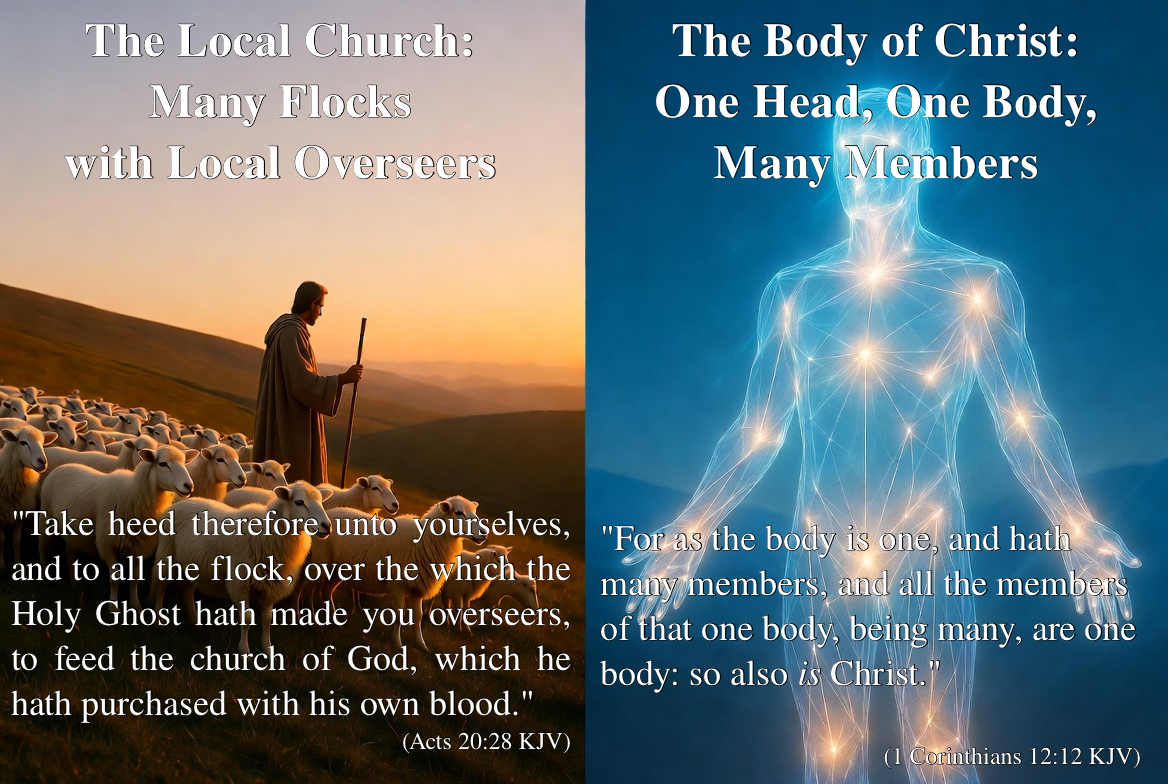
Paul’s message, on the other hand, was brand new. It was the revelation of the mystery that had been kept secret since the world began. (Romans 16:25 KJV) God revealed to Paul a program that was not prophesied: the gospel of the grace of God, where He is reconciling the world to Himself without imputing their trespasses. (2 Corinthians 5:19 KJV) Paul preached one Body where there is neither Jew nor Greek, formed by the baptism of the Holy Spirit, with a heavenly hope and all spiritual blessings already secured in Christ. (Ephesians 1:3; 2:15-16; 3:1-9 KJV)
Have you ever compared Peter’s “end of all things is at hand” (1 Peter 4:7 KJV) or his warnings about turning back from the way of righteousness with Paul’s clear statements that we are already sealed with the Holy Spirit of promise until the day of redemption? (Ephesians 1:13-14 KJV) Or Peter’s call to abide in the vine or face being cast forth and burned with Paul’s assurance that nothing shall separate us from the love of God which is in Christ Jesus our Lord? (Romans 8:38-39 KJV) Paul tells us we are already complete in Christ (Colossians 2:10 KJV), already quickened and seated together in heavenly places (Ephesians 2:5-6 KJV), and that our salvation is a present possession by grace through faith—not something we must endure to the end to receive.
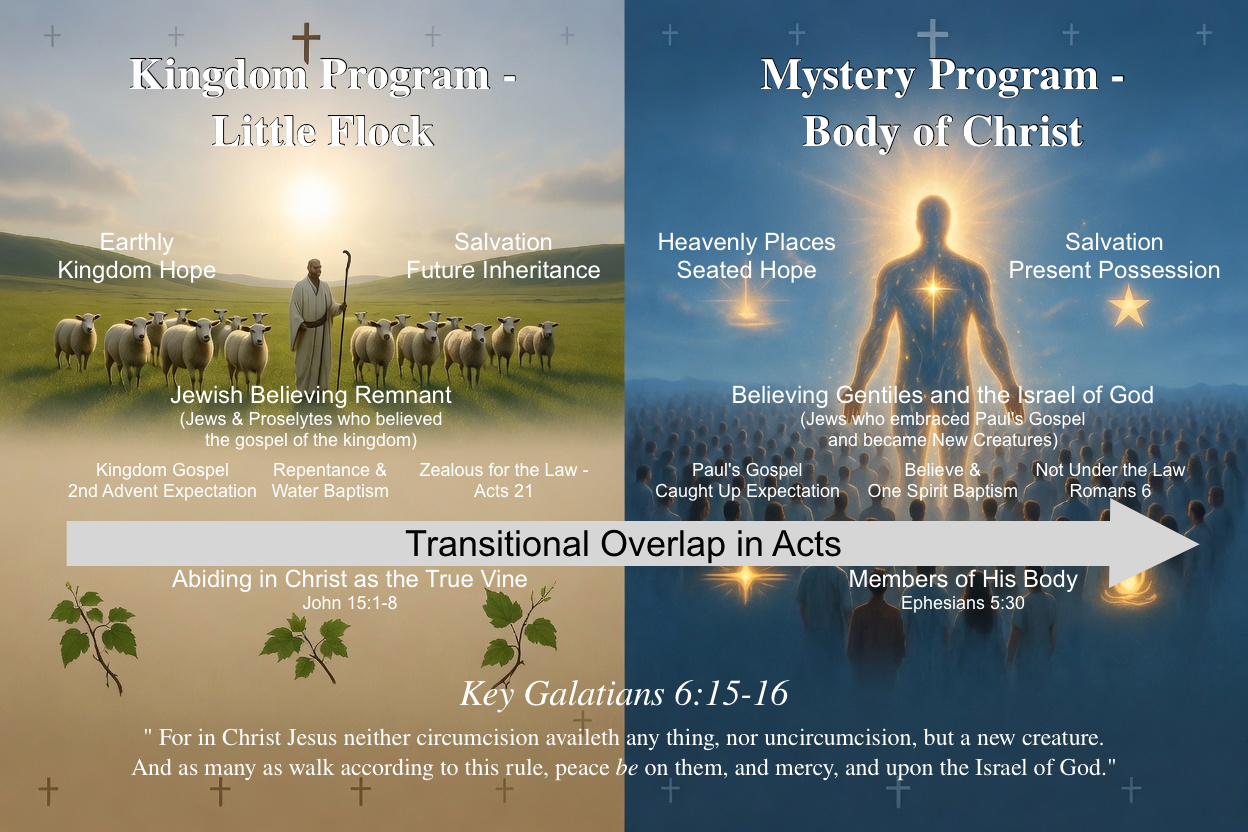
These are not the same program. Peter ministered the gospel of the circumcision to the little flock with a prophetic hope that required endurance to the end. Paul ministered the gospel of the uncircumcision—the unsearchable riches of Christ—to the Body of Christ in this present dispensation of the grace of God, where we are already complete in Him and our salvation is a present possession.
"And ye are complete in him, which is the head of all principality and power:" (Colossians 2:10 KJV)
Mixing the two creates confusion and robs believers of the distinct liberty and blessings revealed only through Paul. Rightly dividing lets each message shine in its proper place: Peter (and Hebrews and John) for the remnant’s kingdom hope and call to endure, Paul for our secure heavenly position and finished work of grace today.
Why This Matters for Us Today
We are not the little flock waiting for the earthly kingdom. We are members of the Body of Christ, saved by the gospel of the grace of God revealed only to Paul. Peter’s letters are still profitable for learning and examples, but our doctrine, our standing, and our hope come from Paul’s thirteen epistles.
“Be ye followers of me, even as I also am of Christ.” (1 Corinthians 11:1 KJV)
“Study to shew thyself approved unto God, a workman that needeth not to be ashamed, rightly dividing the word of truth.” (2 Timothy 2:15 KJV)
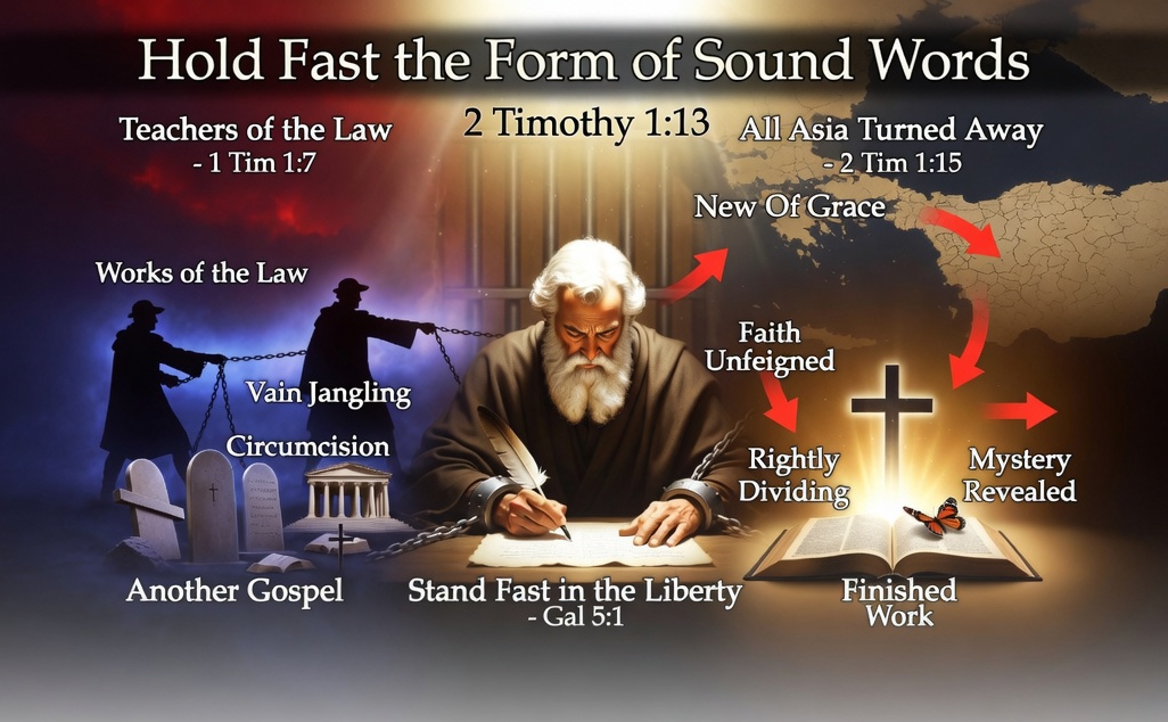
When you see Peter’s audience clearly, the whole Bible opens up. You stop forcing kingdom promises onto the Body of Christ. You stand fast in the liberty of grace. You rejoice that God has given us the ministry of reconciliation right now, today, in this dispensation of the mystery.
So here’s my question for you: If Peter wrote to the scattered little flock of Israel with a kingdom hope that required enduring to the end, and Paul wrote to us with the unsearchable riches of Christ already ours by grace, whose words will you build your teaching and your life upon? The answer is plain in Scripture—follow Paul as he followed Christ.
Grace and peace to you in our Lord Jesus Christ. Keep rightly dividing, keep studying, and keep rejoicing in the finished work revealed through the Apostle to the Gentiles.
© 2026 Edward R. Cross